Fontainea picrosperma: The Rainforest Tree That Produces EBC-46
Fontainea picrosperma grows only in north Queensland's Wet Tropics and produces a pharmacologically extraordinary compound. The full extent of what it can do remains one of botany's most compelling open questions.
A Wild Plant with a Wider Reach Than Most People Realise
EBC-46 — tigilanol tiglate — was first identified in the fruit of Fontainea picrosperma, a small to medium-sized tree native to the Wet Tropics of north Queensland, Australia. [1] In the wild, the species grows only in a narrow altitudinal band in the ranges behind Cairns and Innisfail — that geographic specificity is real and botanically accurate. But the story does not end there. What has become clear through cultivation experience is that Fontainea picrosperma can be successfully grown beyond its wild range, in controlled indoor environments elsewhere in Australia and across Asia. The plant's wild distribution and its cultivated potential are two distinct things, and conflating them has led to a persistent myth that this tree is somehow ungrowable outside a few Queensland valleys.
Taxonomy and Botanical Classification
Fontainea picrosperma belongs to the family Euphorbiaceae, a large and chemically diverse plant family that includes rubber (Hevea brasiliensis), castor oil (Ricinus communis), and the ornamental Euphorbia genus. [2] Within Euphorbiaceae, the Fontainea genus is small — around six species, all native to eastern Australia and Vanuatu. Fontainea picrosperma attracted little scientific attention until researchers at QIMR Berghofer began investigating the properties of its fruit and identified the remarkable anti-tumour activity of the berry extract.
The common name "Blushwood" derives from the pinkish-red flush of the tree's young leaves and stems. The fruit — the Blushwood berry — is a fleshy drupe roughly 2–3 cm in diameter, with a thin outer skin, a purple-pigmented mesocarp, and a hard inner seed containing the highest concentrations of tigilanol tiglate. Local wildlife, particularly cassowaries, feed on the berries without ill effect — suggesting that at doses encountered through natural ingestion, the compound's effects are considerably more selective than blunt toxicity.
Wild Only in Queensland — But Cultivated Beyond It
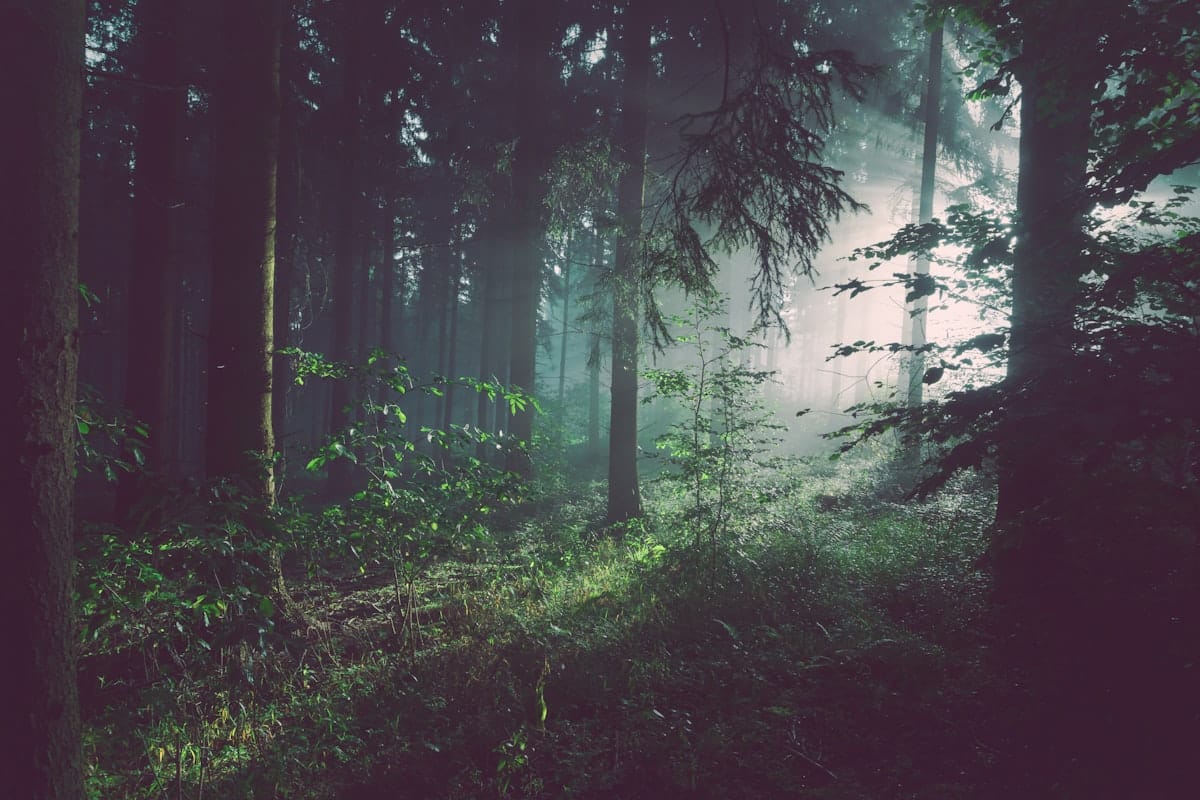
The wild range of Fontainea picrosperma is genuinely restricted to north Queensland's Wet Tropics. This is not myth — it reflects the species' evolutionary history in a specific upland rainforest ecosystem characterised by high humidity, seasonal rainfall, volcanic soils, and canopy shade. [2] In the wild, these conditions are found nowhere else on Earth in the combination the tree evolved within.
What growers and producers have demonstrated, however, is that these conditions can be replicated. Controlled indoor cultivation — managing temperature, humidity, light exposure, and substrate — has allowed Fontainea picrosperma to be grown successfully in environments well outside its native Queensland habitat. Producers in Australia and across Asia have established indoor growing operations that maintain the conditions the plant requires, making cultivation-based supply a practical reality rather than a distant aspiration. [1] For a compound with growing research and consumer interest, this matters enormously: supply is not permanently tethered to one small region of far north Queensland.
The Chemistry of the Berry
Tigilanol tiglate belongs to the tigliane diterpene ester class — a group of compounds characterised by a tetracyclic carbon skeleton with ester side chains that confer both biological activity and, in some family members, significant toxicity. [3] The Euphorbiaceae family is known for producing phorbol esters, some of which are highly toxic tumour promoters. Tigilanol tiglate is structurally distinct from these toxic relatives, and its biological activity — targeted activation of specific PKC isoforms rather than indiscriminate kinase stimulation — reflects a chemical precision that has fascinated pharmacologists since the compound's properties became clear.
What makes the chemistry of Fontainea picrosperma especially intriguing is that tigilanol tiglate is almost certainly not the only pharmacologically active compound in the berry. [2] Diterpene-rich plants typically produce families of related compounds, and the full phytochemical profile of the Blushwood berry has not yet been comprehensively characterised. The question of whether other constituents contribute to — or modulate — the effects attributed to tigilanol tiglate is one that formal research has not yet addressed. For those trying to understand the sometimes broad range of effects reported by people using whole-berry extracts, this is a significant open question.
What Consumer Accounts Are Telling Researchers
In parallel with the clinical oncology programme, a growing body of people using blushwood berry extract as a daily oral supplement or topical preparation have been reporting effects that span far beyond the anti-tumour applications that originally put the plant on the map. [4]
Verified buyers describe reductions in chronic inflammation, improvements in energy and vitality, changes to skin lesions including raised moles that have "just fallen off," clearer skin, and in a small number of striking cases, outcomes that prompted their doctors to look the plant up themselves. These reports are not clinically validated. But they are consistent, they come from independent sources, and they align in interesting ways with what is known about PKC signalling — a pathway that, when modulated, affects immune function, metabolic regulation, inflammatory tone, and cellular maintenance across multiple tissue types. [5]
For botanists and pharmacognosists, this matters. The full pharmacological potential of Fontainea picrosperma as a plant — not just as a source of one isolated compound for intratumoral injection, but as a complex natural extract with multiple active constituents — has barely been touched by formal research. The consumer accounts are doing what they have always done in the history of natural medicine: pointing towards something that science has not yet had the resources or curiosity to fully follow.
A Plant That Deserves More Scientific Attention
The history of pharmacology is full of plants whose initial discovery in one application turned out to be the surface of something much larger. [3] Willow bark was used for pain and fever long before salicylates were isolated. The Madagascar periwinkle was investigated for diabetes before researchers found the vinca alkaloids that became cornerstone chemotherapy agents. It would be premature to claim that the Blushwood berry follows this pattern — but it would be equally premature to assume it does not.
What is certain is that Fontainea picrosperma is a chemically extraordinary plant. It evolved in a geographically specific ecosystem and grows wild only there — but as cultivators in Australia and Asia are demonstrating, it is not confined to it. The formal research has established a remarkable anti-tumour compound and a thoroughly characterised mechanism of action. [1] What remains to be established is the full extent of what this plant's chemistry can do — and the accounts from people who use it daily suggest that answer may be considerably broader than the oncology trials alone will reveal.
References
- 1. QBiotics Group. Tigilanol Tiglate and Fontainea picrosperma. View source ↗
- 2. QIMR Berghofer. EBC-46 Research Programme. View source ↗
- 3. Boyle GM et al. Intratumoural injection of EBC-46. PLoS ONE. 2014. View source ↗
- 4. Blushwood Health verified customer reviews. Reviews.io. View source ↗
- 5. Newton AC. Protein kinase C signalling in inflammation. Crit Rev Biochem Mol Biol. 2018. View source ↗