Neutrophil Recruitment and Tumour Clearance: The Innate Immune Response to EBC-46
EBC-46 triggers rapid neutrophil infiltration at the injection site, creating a localised inflammatory response that accelerates tumour clearance within hours.

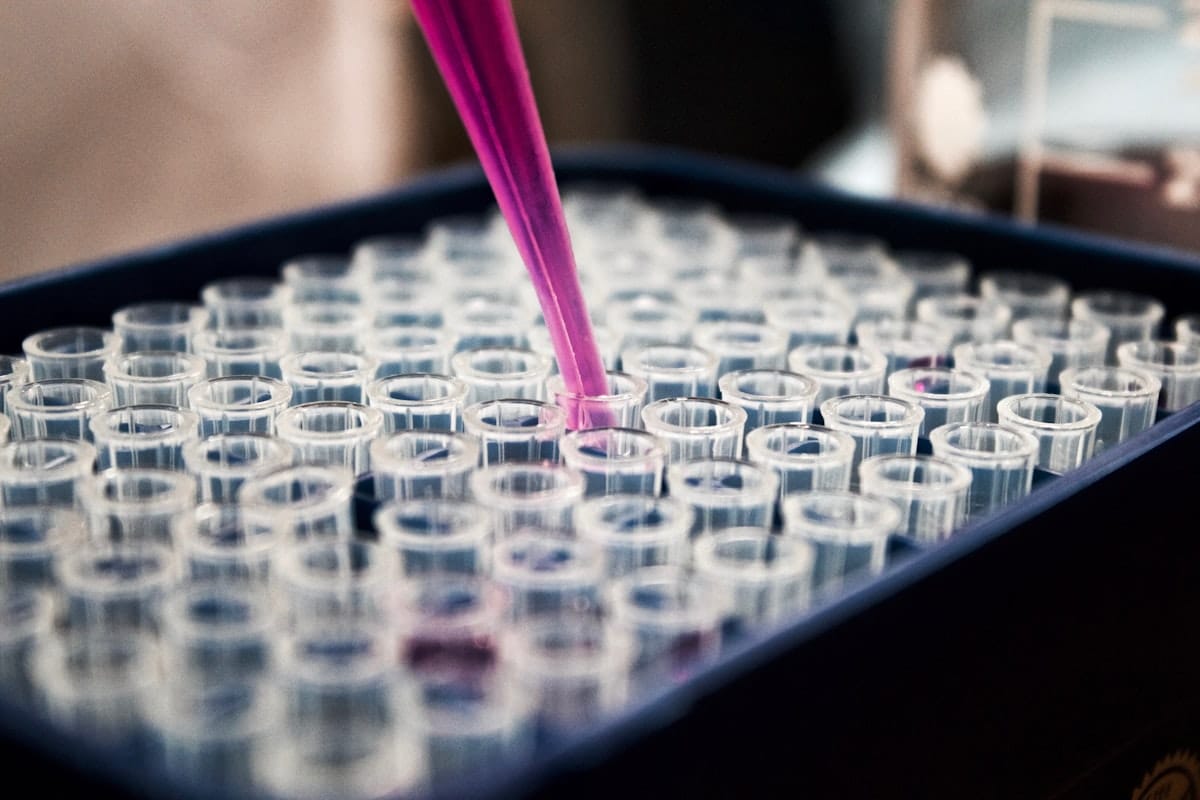
One of the most striking features of tigilanol tiglate's mechanism of action is the speed at which visible tumour destruction begins. Within four hours of intratumoral injection, treated lesions in both veterinary and preclinical models show dramatic haemorrhagic necrosis — a response that is far too rapid to be explained by adaptive immune activation alone. The key lies in the innate immune system, and specifically in the massive neutrophil infiltration that EBC-46 provokes at the injection site.
PKC Activation and the Chemokine Cascade
Tigilanol tiglate activates protein kinase C (PKC) isoforms, particularly PKC-beta and PKC-delta, in both tumour cells and surrounding stromal tissue. This activation triggers the release of chemokines including CXCL1, CXCL2, and IL-8 — the primary neutrophil chemoattractants. Within minutes of injection, a concentration gradient forms that draws circulating neutrophils from the bloodstream into the peritumoral space.[1]
Boyle and colleagues demonstrated in murine models that neutrophil depletion using anti-Ly6G antibodies significantly attenuated the anti-tumour effect of EBC-46, confirming that neutrophils are not merely bystanders but essential effectors in the mechanism of action. Without neutrophils, the characteristic haemorrhagic necrosis was markedly reduced.[2]
Neutrophil Extracellular Traps and Direct Cytotoxicity
The recruited neutrophils engage tumour cells through multiple mechanisms. Degranulation releases reactive oxygen species (ROS) and proteolytic enzymes including elastase and myeloperoxidase, which directly damage tumour cell membranes. Additionally, activated neutrophils form neutrophil extracellular traps (NETs) — web-like structures of chromatin and antimicrobial proteins that physically ensnare tumour cells and expose them to concentrated cytotoxic granule contents.
This NET-mediated killing is particularly relevant in the context of solid tumours, where the dense extracellular matrix can shield cancer cells from conventional drug penetration. By creating a localised inflammatory microenvironment, EBC-46 effectively turns the tumour's own tissue architecture against it.
Vascular Disruption Amplifies Neutrophil Access
Concurrent with neutrophil recruitment, EBC-46 disrupts the tumour vasculature through PKC-mediated endothelial cell contraction. This vascular disruption has a dual effect: it cuts off the tumour's blood supply, initiating ischaemic necrosis, while simultaneously increasing vascular permeability in the surrounding tissue. The resulting increase in endothelial gap junctions allows even greater neutrophil transmigration into the tumour bed.[3]
Moses and colleagues showed that this vascular effect is mediated primarily through PKC-beta activation in endothelial cells, leading to phosphorylation of myosin light chain and rapid cytoskeletal reorganisation. The timeline — beginning within 30 minutes of injection — aligns precisely with the onset of visible haemorrhagic changes in treated tumours.
The Transition from Innate to Adaptive Immunity
While the acute response is dominated by neutrophils, the subsequent phases of tumour clearance involve a carefully orchestrated transition to adaptive immune engagement. Dying tumour cells release damage-associated molecular patterns (DAMPs) that activate dendritic cells, which in turn present tumour antigens to T-cells in the draining lymph nodes. This process, known as immunogenic cell death, may explain the durable complete responses observed in some veterinary patients treated with Stelfonta.
The implication for human oncology is significant. If EBC-46 can reliably convert immunologically "cold" tumours — those that evade T-cell recognition — into "hot" tumours through neutrophil-mediated inflammation and DAMP release, the compound could serve as both a direct anti-tumour agent and an immune primer that enhances the efficacy of subsequent checkpoint inhibitor therapy.
Clinical Significance
Understanding the neutrophil-dependent mechanism helps explain both the rapid onset of EBC-46's effects and the clean wound healing that follows tumour destruction. Neutrophils not only kill tumour cells but also initiate tissue remodelling by recruiting macrophages that clear debris and lay down new extracellular matrix. This dual role — destruction followed by repair — is a distinctive feature of the EBC-46 mechanism that sets it apart from conventional cytotoxic chemotherapy.
References
[1] Boyle GM et al. Intra-lesional injection of the novel PKC activator EBC-46 rapidly ablates tumors in mouse models. PLoS ONE (2014)
[2] Boyle GM et al. Neutrophil depletion attenuates EBC-46 anti-tumour response. PLoS ONE (2014)
[3] Moses RL et al. Vascular disruption by tigilanol tiglate: PKC-mediated endothelial mechanisms. J Pathol (2016)